London Rental Yield Map 2026/2027: Highest Yield Postcodes for New Build Investors

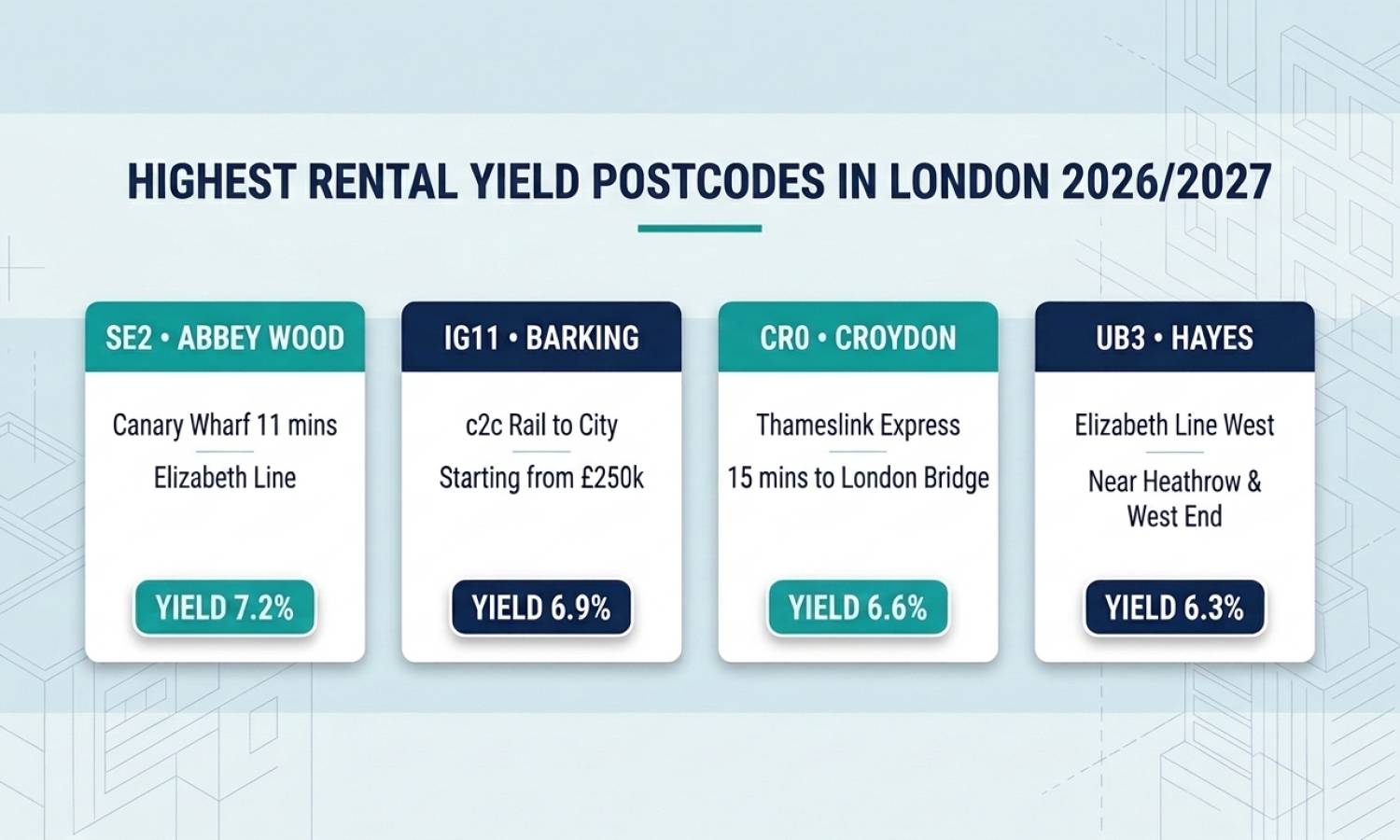
The highest rental yield postcodes in London for 2026/2027 are SE2 (Abbey Wood), IG11 (Barking), CR0 (Croydon), and UB3 (Hayes), delivering gross rental yields between 5.8% and 7.2% on new build apartments. Rapid transit connections, accessible purchase prices under £350,000, and sustained corporate tenant demand underpin these outer regeneration hotspots.
As borrowing costs stabilise, buy-to-let investors are pivoting decisively away from low-yielding central London enclaves (where prime yields sit between 3.0% and 3.6%) towards high-cashflow outer boroughs. High energy efficiency standards, resident amenities, and zero initial refurbishment costs give modern developments an undeniable edge over aging Victorian conversion stock.
London Rental Yield Map: Top Postcodes Benchmark (2026/2027)
Rental yields vary dramatically across the capital. Outer regeneration zones located along high-speed transit arteries currently offer the strongest combination of monthly cashflow and tenant stability:
| Postcode & District | Travel Zone | Avg 1-Bed Price | Avg Monthly Rent (1-Bed) | Gross Rental Yield | Key Commute Link |
|---|---|---|---|---|---|
| SE2 (Abbey Wood / Thamesmead) | Zone 4 | £275,000 – £310,000 | £1,650 – £1,750 | 6.4% – 7.2% | 11 mins to Canary Wharf (Elizabeth line) |
| IG11 (Barking & Dagenham) | Zone 4 / 5 | £250,000 – £295,000 | £1,450 – £1,600 | 6.2% – 6.9% | 22 mins to Fenchurch St (c2c / Overground) |
| CR0 (Croydon Central) | Zone 5 | £290,000 – £330,000 | £1,550 – £1,700 | 5.9% – 6.6% | 15 mins to London Bridge / Victoria (Thameslink) |
| UB3 (Hayes & Harlington) | Zone 5 | £315,000 – £355,000 | £1,600 – £1,750 | 5.6% – 6.3% | 20 mins to Paddington / Heathrow (Elizabeth line) |
| E15 / E20 (Stratford Fringe) | Zone 2 / 3 | £420,000 – £470,000 | £1,950 – £2,200 | 5.2% – 5.8% | 8 mins to Liverpool St (Multi-line interchange) |
Deep Dive: Top 4 Yield Hotspots Analyzed
1. SE2: Abbey Wood and Thamesmead (Yield: Up to 7.2%)
SE2 remains London's undisputed champion for rental yield efficiency. The opening of the Elizabeth line slashed travel times into Canary Wharf to just 11 minutes, triggering an influx of finance and tech workers looking to avoid inner-city rents.
Developments such as Southmere in neighbouring Thamesmead offer lake views, co-working lounges, and resident amenities at purchase prices that keep borrowing costs manageable. Investors targeting SE2 benefit from an expansive catchment across new builds in Bexley and neighbouring green corridors.
2. IG11: Barking and Dagenham (Yield: Up to 6.9%)
Barking represents London's lowest price entry point per square foot, making IG11 an exceptional yield multiplier. Multi-billion-pound brownfield masterplans are introducing contemporary residential quarters served by London Overground, c2c rail, and Uber Boat by Thames Clippers services.
Schemes like Beam Park allow landlords to secure modern one- and two-bedroom apartments priced from £250,000. Tenants are attracted by fast 22-minute links into Fenchurch Street and access to riverside recreation.
3. CR0: Croydon Town Centre (Yield: Up to 6.6%)
Croydon is South London's primary commercial hub. East Croydon station operates round-the-clock rail connections reaching London Bridge and Victoria in 15 minutes, as well as direct connections to Gatwick Airport.
Explore new builds in Croydon where institutional build-to-rent operators and private landlords report void periods under 10 days. The large local student population and tech incubator ecosystem ensure year-round occupancy.
4. UB3: Hayes and Harlington (Yield: Up to 6.3%)
West London traditionally commands premium price tags, but UB3 provides an accessible pocket with direct access to Heathrow Airport and the West End. As examined in our guide to the Elizabeth line and Superloop effect, transport links directly dictate rental liquidity.
Waterside regeneration schemes such as Hayes Village on the Grand Union Canal deliver substantial tenant demand from airport logistics executives and central London office workers alike.
Why New Builds Deliver Superior Net Rental Yields
Experienced investors evaluate investments on net income rather than headline gross returns. Modern new build apartments consistently outperform older Victorian conversions across three financial metrics:
- Energy Performance Certificate (EPC) Premium: New builds in London achieve EPC ratings of B or A. With proposed regulations mandating minimum EPC standards for rental stock, landlords in older drafty properties face thousands in retrofit expenses, whereas new builds are fully compliant through 2030 and beyond.
- Minimal Maintenance & Void Periods: Every home is covered by a 10-year structural warranty (NHBC, Premier, or equivalent) and a 2-year developer defect period. Modern appliances, integrated heat networks, and concierge parcel handling reduce tenant turnover and zero-out costly call-out repairs.
- 10% to 15% Tenant Price Premium: Tenants routinely pay a measurable premium for secure cycle storage, resident gyms, private balconies, and dedicated work-from-home spaces.
Gross vs Net Yield: Factoring In Service Charges
Before executing an exchange of contracts, landlords must account for ongoing estate management costs. Building insurance, concierge staffing, lift servicing, and reserve funds are funded via building service charges.
In outer London schemes without high-maintenance wet facilities (such as heated pools), service charges typically sit between £2.80 and £4.20 per square foot per year. For an in-depth breakdown of what facilities add to annual invoices, review our comprehensive analysis of London new build service charges.
Factoring in management fees (typically 8% to 10% + VAT) and ground rent (which is legally set at £0 on newly granted leases), a 6.8% gross yield in SE2 or IG11 typically converts into a robust 5.3% to 5.8% net cash return.
Capital Growth Outlook Alongside Rental Income
The most lucrative property investments combine strong monthly rental yield with steady capital value appreciation. As detailed in our London property market forecast 2027, outer regeneration districts are projected to achieve 4.5% to 5.5% annual capital growth over the next cycle.
If you are looking for properties priced below median capital thresholds, explore our curated list of the cheapest areas for new builds under £500k or filter live developments directly in our new homes up to £500,000 catalog.