Your First Home Scheme: New 2.5% Deposit Equity Loan for UK New Builds

The Your First Home scheme is a UK government-backed equity loan initiative announced in September 2026 to help first-time buyers purchase new build properties with just a 2.5% deposit. Backed by a 20% interest-free government equity loan and a 77.5% commercial mortgage, it substantially lowers upfront cash barriers and monthly borrowing costs.
Confirmed ahead of the upcoming Budget by the Ministry of Housing, Communities and Local Government (MHCLG), the programme succeeds the previous Help to Buy initiative. It directly targets the biggest hurdle facing young buyers: saving a substantial five-figure deposit while paying private rents.
How the Your First Home Scheme Works
The financial architecture of the programme divides the purchase price into three distinct components: a minimal buyer deposit, an equity loan from the government, and a standard high-street mortgage.
By contributing a 20% equity loan, the government enables buyers to access lower loan-to-value (LTV) mortgage brackets (77.5% LTV instead of 95% LTV). Commercial lenders offer substantially cheaper interest rates on 75% to 80% LTV mortgages, reducing monthly repayments by hundreds of pounds compared to standard 95% mortgages.
| Property Price | 2.5% Buyer Deposit | 20% Equity Loan (0% Interest) | 77.5% Mortgage Amount | Est. Monthly Saving vs 95% LTV |
|---|---|---|---|---|
| £250,000 | £6,250 | £50,000 | £193,750 | ~£180 – £240 / month |
| £350,000 | £8,750 | £70,000 | £271,250 | ~£260 – £330 / month |
| £450,000 | £11,250 | £90,000 | £348,750 | ~£340 – £430 / month |
| £500,000 | £12,500 | £100,000 | £387,500 | ~£390 – £480 / month |
Key Features of the Equity Loan
Similar to previous government schemes, the 20% equity loan comes with an initial interest-free period. During these opening years, buyers make zero interest payments on the equity loan component, paying only a nominal monthly management fee (typically £1 per month).
Because the government holds an equity stake rather than a fixed cash debt, the repayment amount reflects property value changes over time. If you sell the home or choose to redeem the loan, you repay 20% of the market value at the time of redemption.
Participating housebuilders are required to make a financial contribution when registering developments under the scheme. This co-funding model ensures the policy supports new housing supply while keeping public funding sustainable.
Comparing Your First Home vs Other UK Buyer Schemes
Prospective buyers have multiple state-backed routes to explore. Here is how Your First Home compares to alternative purchase structures:
| Scheme | Minimum Deposit | Ownership Share | Core Benefit |
|---|---|---|---|
| Your First Home (2026) | 2.5% | 100% (with 20% equity loan) | Lowest deposit on the open market plus cheaper 77.5% mortgage rates. |
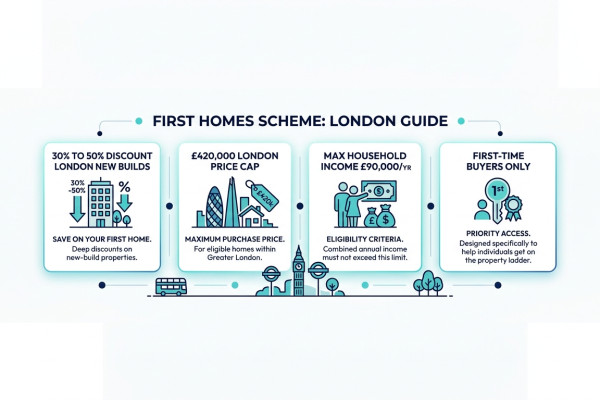
| First Homes Scheme | 5% | 100% full legal title | 30% to 50% discount on purchase price. Read our full First Homes Scheme guide. |
| Shared Ownership | 5% of share (approx 1.25%–2%) | 25% to 75% initial share | Part buy, part rent structure suitable for lower household incomes. |
| Standard 95% Mortgage | 5% | 100% | Available on older and new homes, but carries higher commercial interest rates. |
Eligibility Criteria: What We Know Ahead of the Budget
While full regional parameters will be published in next month's Budget, the government has confirmed the core eligibility principles:
- First-Time Buyers Only: All named applicants on the mortgage and title must be genuine first-time buyers who have never previously owned residential property in the UK or abroad.
- New Build Properties Only: The scheme applies exclusively to newly constructed homes purchased directly from developers signed up to the initiative.
- Household Income Caps: The scheme will enforce regional income ceilings to ensure financial assistance reaches households genuinely constrained by affordability thresholds.
- Local Property Price Caps: Maximum purchase price limits will be tailored by region, reflecting the higher entry costs of London and the South East compared to northern regions.
- Main Residence Requirement: Properties must serve as your sole primary residence. Subletting and buy-to-let investments are strictly excluded under scheme rules.
Why the Scheme Matters for London and Outer Suburbs
In London, where median first-time buyer property prices regularly exceed £400,000, saving a traditional 10% deposit (£40,000) or even a 5% deposit (£20,000) takes years for working tenants. A 2.5% deposit lowers that threshold to £10,000 on a £400,000 home.
This policy change will accelerate demand across connected outer boroughs. Regeneration schemes in areas like Beam Park in East London, Southmere in Thamesmead, and Hayes Village in West London offer high-quality new builds that fit neatly within regional price ceilings.
If you are researching accessible entry points across Greater London, browse our guide to the cheapest areas for new builds under £500k or explore live developments in our new homes up to £500,000 catalog.
Important Budgeting Advice: Ongoing Costs and Service Charges
While lowering your upfront deposit makes homeownership attainable sooner, buyers must remember that legal and maintenance costs still apply. You will need additional cash reserves for solicitor conveyancing fees, mortgage arrangement fees, and moving expenses.
Furthermore, new build apartments involve ongoing estate charges. Understanding how building management works is vital before completing. Check our comprehensive breakdown of London new build service charges to see what communal facilities cost annually and how to protect yourself against sudden fee increases.
5 Action Steps to Prepare for Launch
If you plan to utilise the Your First Home scheme once applications open, take these practical steps now:
- Build Your 2.5% Deposit Fund: Calculate 2.5% of your target purchase price, plus an extra £3,000 to £5,000 for legal and survey fees.
- Audit Your Credit Profile: Obtain copies of your credit report from major credit reference agencies. Settle outstanding consumer debt to ensure you qualify for the 77.5% commercial mortgage.
- Establish Budget Readiness: Review your household income against local caps and speak with a specialist new build mortgage broker who understands government equity loan products.
- Shortlist Eligible Developments: Explore active new homes in London and register your interest directly with leading housebuilders.
- Review Alternative Schemes: Examine whether designated discount options like the First Homes Scheme offer a superior long-term discount for your specific borough.
Frequently Asked Questions
FAQ
The government confirmed the scheme on 26 September 2026. Full technical regulations, regional price caps, and implementation dates will be announced by the Chancellor at next month's Budget.
The scheme requires a minimum deposit of 2.5% of the full purchase price, which is half the traditional 5% requirement for standard commercial low-deposit mortgages.
The equity loan includes an initial interest-free period. During these initial years, borrowers pay no interest on the 20% government loan, paying only a minimal monthly management fee.
No. The scheme is strictly restricted to first-time buyers purchasing their primary residence. Applicants cannot own or have previously held an interest in residential property anywhere in the world.